


Common Backyard Birds in California
California’s diverse habitats, ranging from coastal areas and mountains to urban backyards, host an impressive array of bird species. Whether you’re in Northern California or in sunny Southern California, the birds listed in this article are some of the most common visitors to backyards.
1. American Robin (Turdus migratorius)

Appearance: The American Robin is easily recognizable by its bright orange-red breast, gray back and wings, and white lower belly. Adults typically have a black head and tail with white corners.
Behavior: These birds are often seen hopping across lawns, gardens, and city parks, looking for earthworms and insects. They are known for their melodious songs, which can be heard at dawn and dusk.
2. Anna’s Hummingbird (Calypte anna)
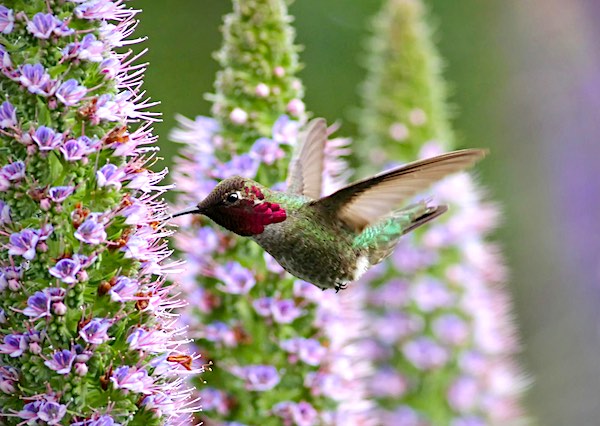
Appearance: Anna’s Hummingbird is a small, vibrant bird with an iridescent emerald green back and a rose-red throat in males, which can appear dull brown or gray in females and juveniles.
Behavior: Known for their incredible flying abilities, including hovering in mid-air and flying backwards, they are attracted to nectar from flowers and feeders. They are also known to occasionally eat small insects and spiders. Check out my article about birds that eat spiders if you want to see video proof.
3. California Towhee (Melozone crissalis)
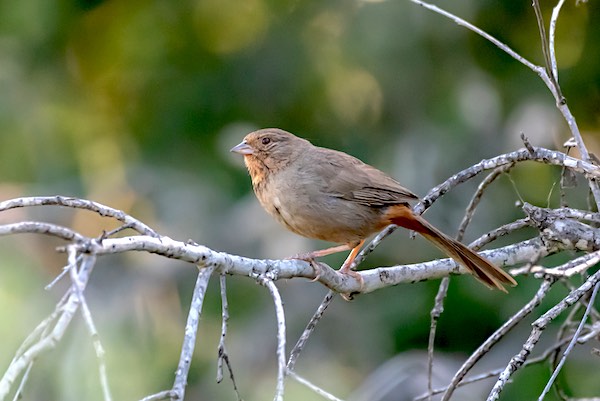
Appearance: This bird sports a uniform brown color with slight rusting under the tail and around the vent area. It is larger and more robust compared to house sparrows and finches.
Behavior: California Towhees are ground foragers, often seen scratching at the soil under bushes or feeders. They have a simple, repetitive call that is easy to recognize and are known for their curiosity.
4. Northern Mockingbird (Mimus polyglottos)
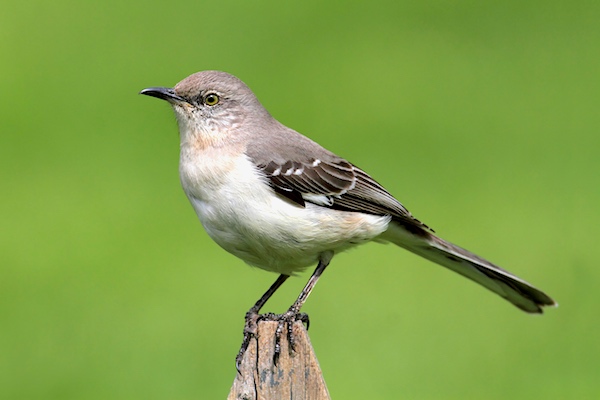
Appearance: Mockingbirds have a long, slender body, gray on the upper parts with a whitish underside. They possess two distinctive white wing bars and white outer tail feathers that are conspicuous in flight.
Behavior: Renowned for their song, Northern Mockingbirds mimic the calls of other bird species, as well as other sounds in their environment. They are territorial and can often be seen vigorously defending their nests from intruders.
5. Western Scrub-Jay (Aphelocoma californica)
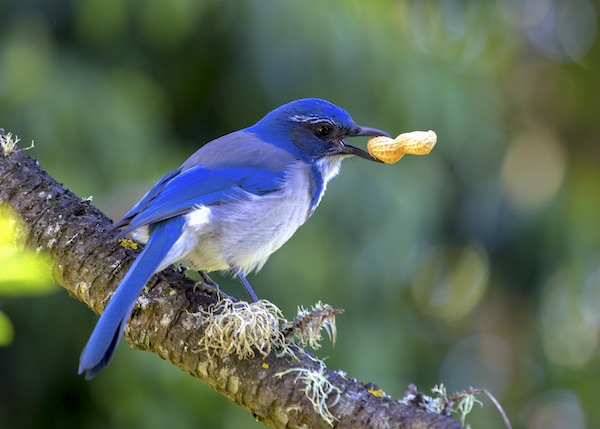
Appearance: These jays have striking blue upper parts, a white throat with a blue necklace, grayish underparts, and a robust bill. They are larger and more boldly colored than other songbirds.
Behavior: Western Scrub-Jays are known for their intelligence, including their ability to plan for the future. They cache food in numerous locations and remember where they’ve stored it. They are often seen in pairs or small family groups.
6. House Finch (Haemorhous mexicanus)
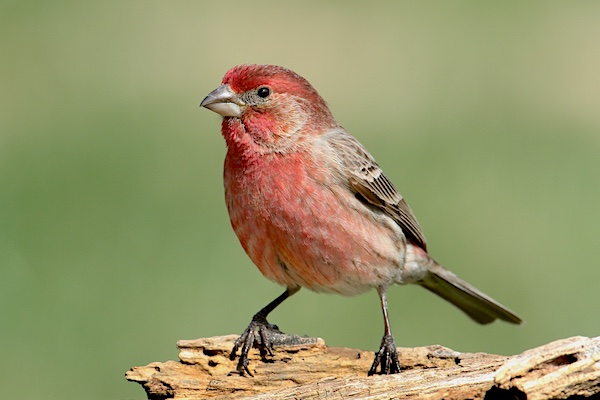
Appearance: The male House Finch has a bright red head and breast, with brown streaks on its back and tail. Females are generally grayish-brown with bold streaks.
Behavior: These birds are social and often found in noisy groups. They are adaptable, feeding on seeds, fruits, and insects. House Finches are frequent visitors to bird feeders, especially those filled with sunflower seeds.
7. Spotted Towhee (Pipilo maculatus)
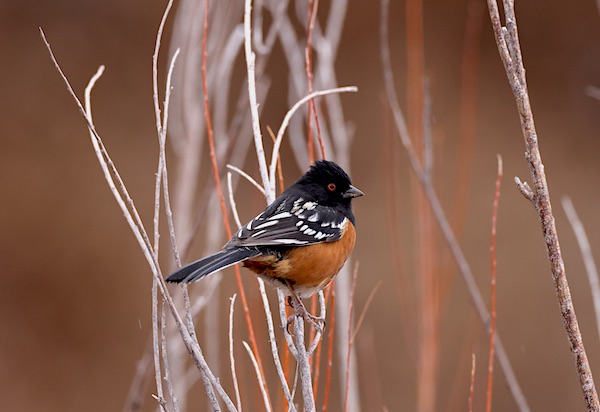
Appearance: Spotted Towhees have a striking appearance with a black upper body in males (brown in females), white spots on their wings and back, and a white belly. Their sides are rufous, and they have bright red eyes.
Behavior: They spend much of their time on the ground under dense foliage, scratching at the leaf litter in search of food. Their song is a distinctive, sweet trill.
8. Black Phoebe (Sayornis nigricans)
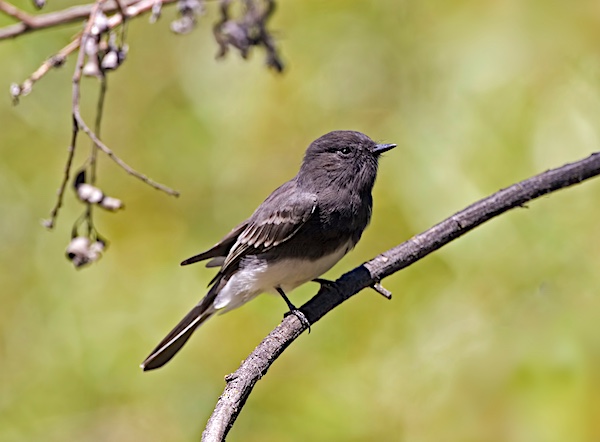
Appearance: The Black Phoebe is a small flycatcher with a sooty black body and a stark white belly. Its sleek appearance is complemented by a slight crest and a medium-length tail.
Behavior: Often found near water, these birds have a characteristic behavior of perching on a branch or ledge and making quick flights to catch insects in mid-air. They are known for their repeated sharp “fee-bee” call.
9. Mourning Dove (Zenaida macroura)

Appearance: Mourning Doves are slender, medium-sized birds with soft gray-brown bodies and black spots on their wings. They have long, pointed tails with white edges, visible during flight.
Behavior: Recognized by their soft, woeful cooing, these doves are ground feeders that prefer open areas or scattered trees. They are often seen in pairs and can become quite tame around human habitation.
10. American Crow (Corvus brachyrhynchos)

Appearance: American Crows are large, all-black birds, including their legs and bill. Their glossy feathers can exhibit a bluish or purplish sheen in the right light.
Behavior: Highly intelligent and adaptable, crows are known for their problem-solving skills and complex social structures. They eat a wide variety of food, from insects to waste, and are known for their loud, cawing calls.
11. Oak Titmouse (Baeolophus inornatus)
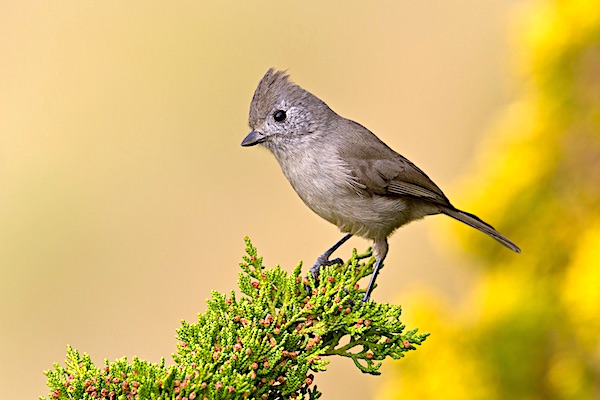
Appearance: The Oak Titmouse is a small bird with a plain grayish-brown body, a small crest on its head, and a short bill. It lacks strong field marks but its personality is quite distinctive.
Behavior: These titmice are curious and energetic, often seen flitting through oak woodlands and scrub in search of insects. Their presence is often announced by their repetitive, peter-peter-peter call.
12. Lesser Goldfinch (Spinus psaltria)
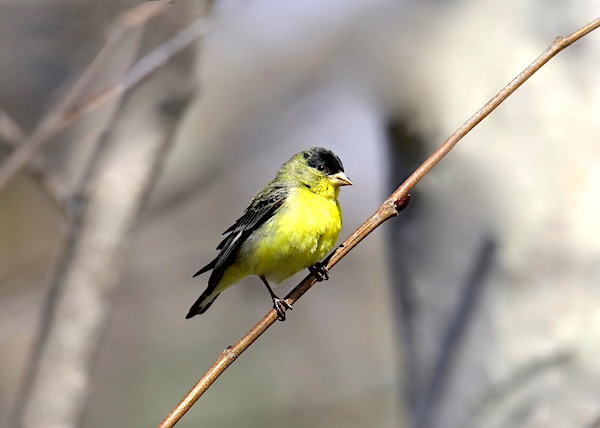
Appearance: Males are easily identified by their bright yellow underparts, black cap, and white patches on the wings. Females and juveniles are more subdued, with olive or gray upper parts and yellowish underparts.
Behavior: Lesser Goldfinches are social birds, often seen in flocks at feeders or drinking from shallow water sources. They primarily feed on seeds, especially from thistles and sunflowers.
13. Steller’s Jay (Cyanocitta stelleri)
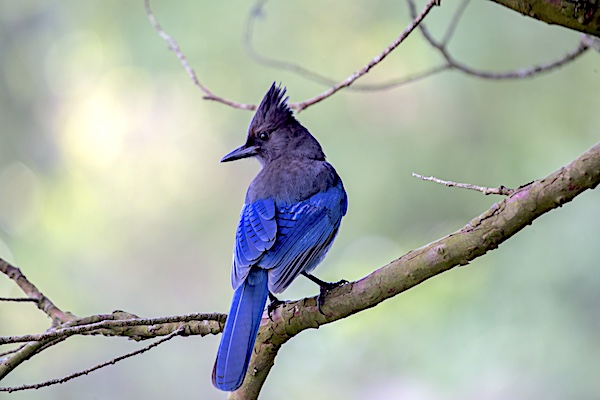
Appearance: Steller’s Jays are striking birds with deep blue and black plumage. They have a prominent crest on their head, which can be raised or lowered depending on their mood. The black extends from the head down through the throat, contrasting with the vibrant blue of their wings and tail.
Behavior: These jays are known for their loud, raspy calls and are often found in coniferous forests as well as suburban areas with large trees. They are bold, capable of mimicking the calls of other birds, and are known to be quite assertive at feeders, often driving away smaller birds.
14. Red-Shouldered Hawk (Buteo lineatus)
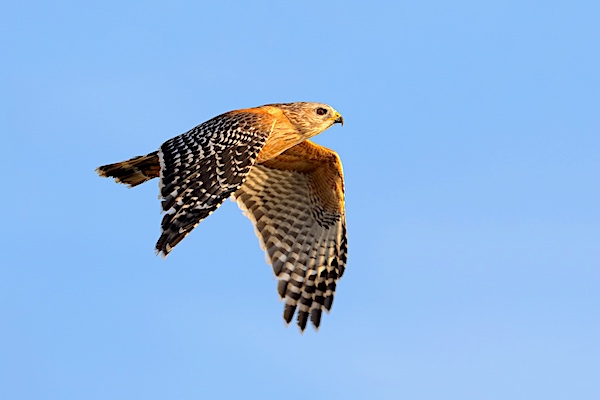
Appearance: This medium-sized hawk has striking barred red and black plumage on its chest and wings, with a tail marked by thin white bands. Its shoulders, as the name suggests, show a rich reddish hue.
Behavior: Red-shouldered Hawks are forest dwellers but can often be seen in suburban areas where wooded patches remain. They have a distinctive, loud kee-rah call and are known for their soaring flight over open fields, scanning for small mammals and reptiles.
15. Western Bluebird (Sialia mexicana)
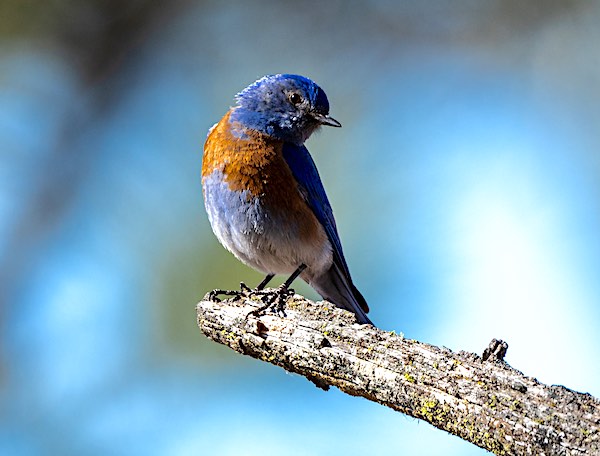
Appearance: The male Western Bluebird sports a vivid blue back and wings with a rusty chest, while females are more subdued with grayish-blue wings and a lighter orange-brown breast.
Behavior: These small thrushes are cavity nesters, often utilizing old woodpecker holes or nest boxes. They are seen in meadows and open woods, where they perch low to the ground to catch insects. Their fluttering flight and soft calls add a delicate beauty to the landscapes they inhabit.
16. Yellow-Rumped Warbler (Setophaga coronata)

Appearance: In their winter plumage, which they often wear in California backyards, Yellow-rumped Warblers have a streaked gray-brown body, a faintly marked face, and a conspicuous yellow rump. Breeding males display a striking combination of bright yellow, black, white, and gray.
Behavior: Known for their agility, these warblers flit about in trees and shrubs, gleaning insects and occasionally catching them in midair. They are one of the few warblers able to digest the waxes in bayberries and wax myrtles, which allows them to winter farther north than other warblers.
17. Dark-Eyed Junco (Junco hyemalis)

Appearance: Often referred to as “snowbirds,” Dark-eyed Juncos are medium-sized sparrows with a neat flash of white in their tails. The “Oregon” variety, common in California, has a dark hood, brown back, and pinkish sides.
Behavior: These birds are ground feeders, often seen hopping around the bases of bird feeders or under bushes, searching for seeds. In winter, they can form sizable flocks with a social hierarchy that determines access to food and mates.
18. Acorn Woodpecker (Melanerpes formicivorus)
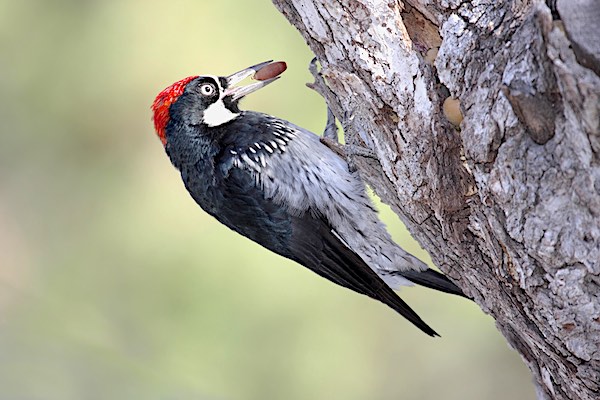
Appearance: Acorn Woodpeckers have a clownish appearance, with a black body, a red cap (on males), and a striking white face and throat. Their call is a distinctive, laughing waka-waka sound.
Behavior: True to their name, these woodpeckers are famous for drilling holes in trees (or even wooden buildings) to store acorns. They live in large, social groups and defend their acorn caches vigorously. They are a common sight in oak woodlands across California.
Tips for Feeding Backyard Birds
- Ensure that feeders are clean to prevent the spread of diseases.
- Use quality bird feed to attract a variety of species.
- Regularly refill feeders, especially during the winter months when natural food sources might be scarce.
- Position feeders in a safe spot, away from predators and strong winds.
Birdwatching Tips
- Invest in a good pair of binoculars for a clearer view of distant birds.
- Keep a bird guide or app handy to help identify different species.
- Maintain a bird journal to keep track of the species you spot, along with dates and any unique behaviors.
- Join local birdwatching clubs or groups to share experiences and learn from fellow enthusiasts.
Attracting Birds to Your Backyard
To entice more birds to your backyard in California, consider installing bird feeders and water sources, like bird baths. If you want to attract a particular species of bird, choose a food that it prefers. For example, hummingbirds are attracted to sugar water, finches love thistle seeds, and many birds are drawn to sunflower seeds.
Planting native plants, shrubs, and trees can also provide natural food sources and shelter for birds. Moreover, providing birdhouses or nesting boxes can offer safe havens for various bird species.
Conclusion
The birds listed here represent just a fraction of the avian diversity found in California’s backyards. Each species, from the darting hummingbirds to the noisy crows, plays a vital role in the ecosystem, contributing to insect control, seed dispersal, and the enjoyment of birders. I hope you learned something today, if you want to learn more about birdwatching and how it benefits us, check out my article on birdwatching basics.